Truck Safe Strapless A-Frame

Engineered Strapless Slab Transport for Trucks

“The Truck Safe Strapless A-Frame (SSH SL TAF-30) is a fully integrated mechanical compression slab-transport system that eliminates straps as a primary load-securing method while delivering controlled, repeatable restraint for truck hauling applications.”

Control the Load Before It Moves.

The Truck Safe Strapless A-Frame (SSH SL TAF-30) is a fully integrated mechanical compression slab transport system designed specifically for truck-mounted hauling — replacing reactive strap tension with engineered structural control.

Developed by an engineer with 30+ years of industry experience solving slab handling challenges.

Slabs don’t shift because straps are loose.
They shift because force changes under motion.

Braking transfers weight forward.
Vibration works against tension.
Cornering twists the frame.

Straps react after movement begins.

By the time webbing stretches, the slab has already started rotating.

The Truck Safe Strapless A-Frame replaces variable tension with fixed mechanical compression — controlling slab position through vibration, uneven roads, and hard stops.

No stretch.
No re-tightening.
No dependence on changing strap tension.

Just engineered mechanical compression designed for highway transport forces.

The SSH SL TAF-30 allows operators transitioning from traditional methods to continue using straps as a secondary backup while building confidence in strapless hauling.

But the system is engineered to haul without straps as the primary restraint.

Engineering Overview: Truck Safe Strapless A-Frame Installation & Load Control

Why Strap-Only Slab Hauling Fails

Why Strap-Only Slab Hauling Fails

On most truck A-frames, the only thing keeping stone in place is a web of straps and a hope that they stay tight.
But tension is not a fixed control system. As the truck moves, everything that touches the load is trying to loosen, stretch, or shift.

Over a typical day, these real-world conditions eat away at strap control:

❌ Repeated braking and acceleration that make straps stretch and rebound

❌ One-sided loading or unloading that leaves weight stacked on a single side

❌ Potholes, curbs, and driveway transitions that twist the frame and rock the slabs

❌ Forklift bumps, tie-down adjustments, or “just one more” slab added to the stac

❌ Blocking that crushes, settles, or absorbs moisture and loses height over time

By the time a driver sees movement, the slab stack has already begun to rotate.
The straps are only reacting after the shift has started.

The Truck Safe Strapless A-Frame flips that equation.
Instead of relying on constantly changing strap tension, it uses a mechanical compression frame to trap slabs between engineered contact points, keeping control through vibration, uneven roads, and hard stops while your standard tie-downs go back to their original job: securing the rack, not acting as the primary safety system.

Semi-truck granite spill on I-24 causes massive delays.
When slabs tip from unstable frames, the collapse is sudden and catastrophic.
Engineered structure must come first. Restraint only works when the frame itself is built to handle the load.

Meet the Truck Safe Strapless A-Frame

Integrated Mechanical Compression for Controlled Slab Transport

The Truck Safe Strapless A-Frame (SSH SL TAF-30) is engineered specifically for truck-mounted slab hauling where predictable load control is required.

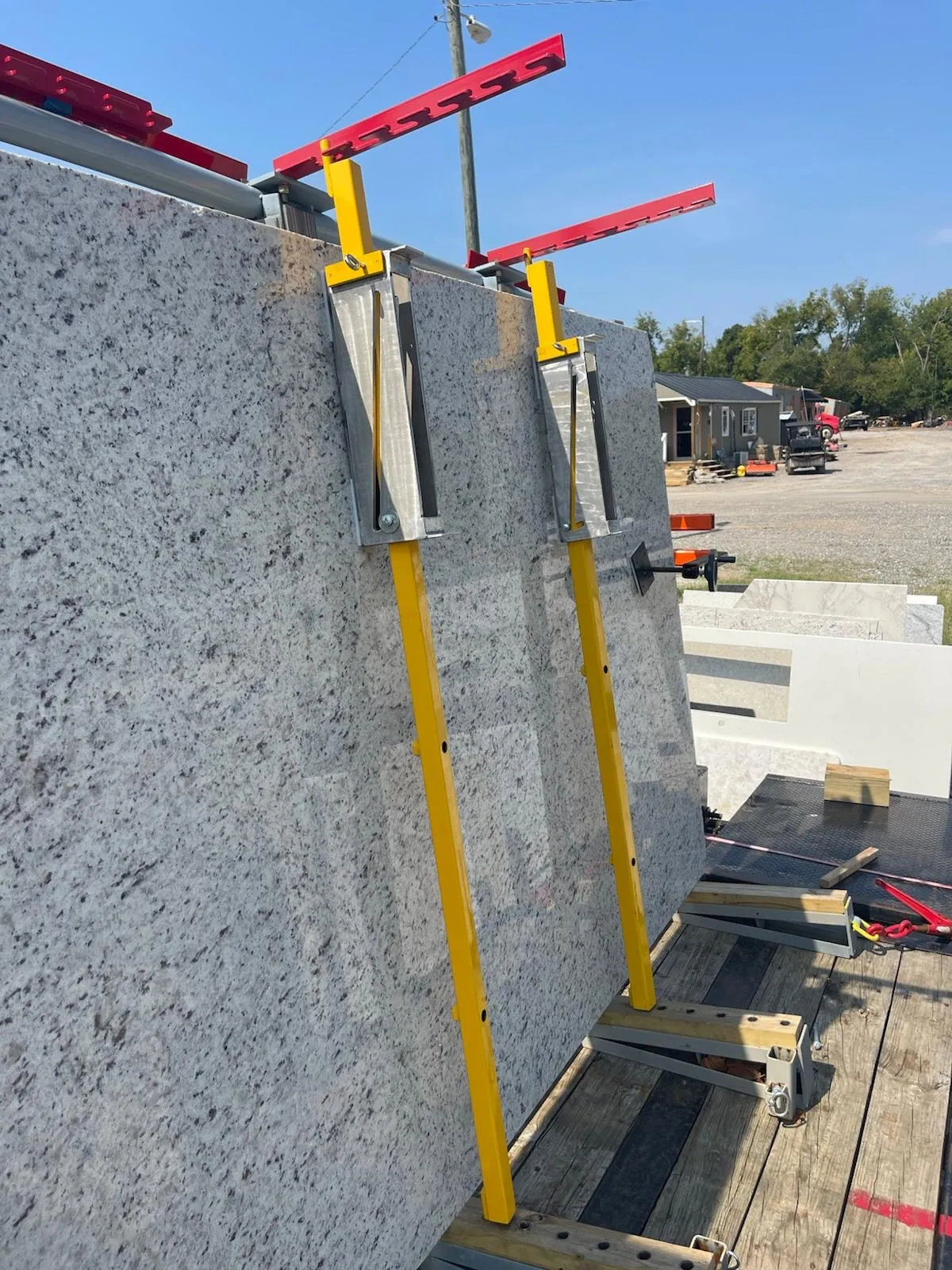
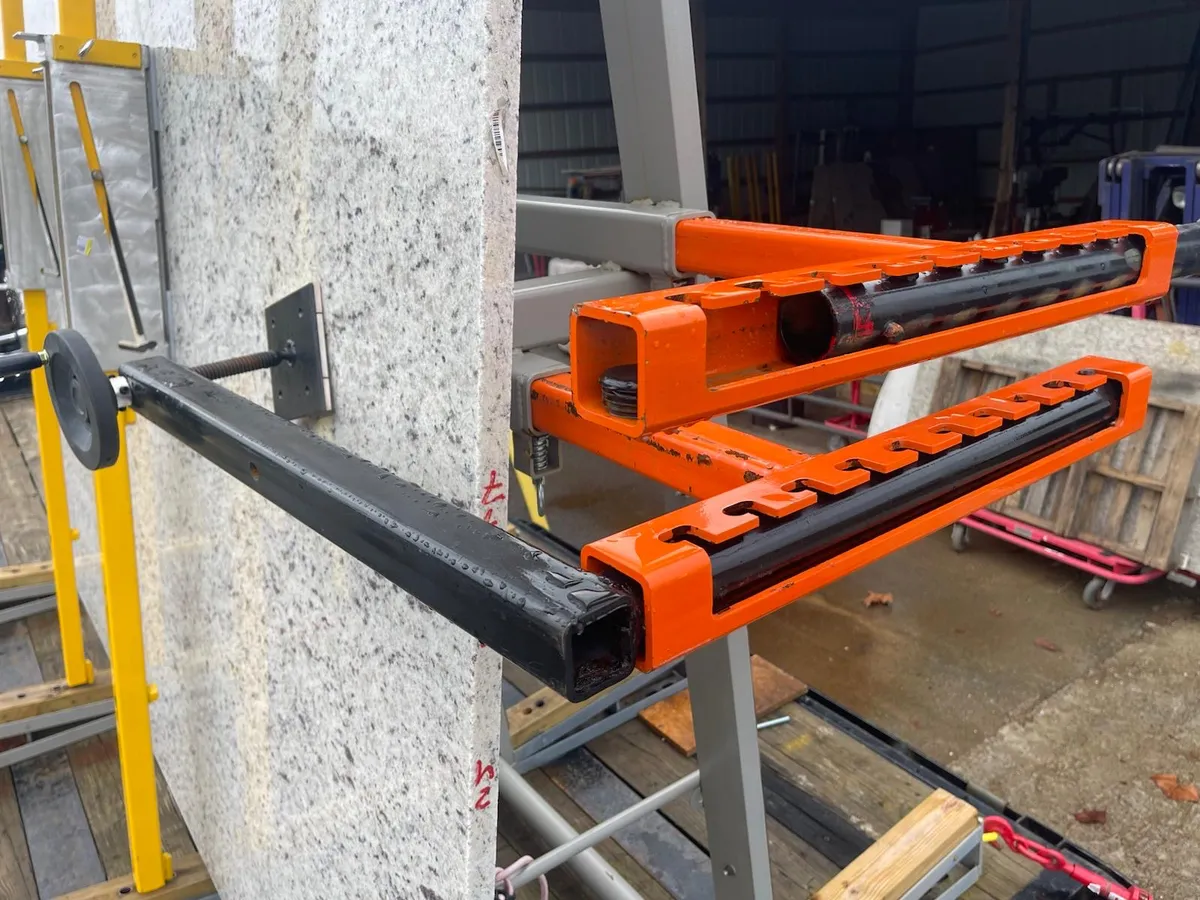
Instead of relying on strap tension alone, this system integrates a patented RockLock™ mechanical compression assembly directly into the A-frame structure.

Compression first.
Straps optional.
Control throughout transit.

Heavy-gauge U.S. steel construction combined with engineered compression points creates controlled slab contact zones — reducing uncontrolled forward, backward, and lateral movement during loading, braking, and cornering.

Unlike improvised strap-based systems, the TAF-30 is designed as a complete transport platform:

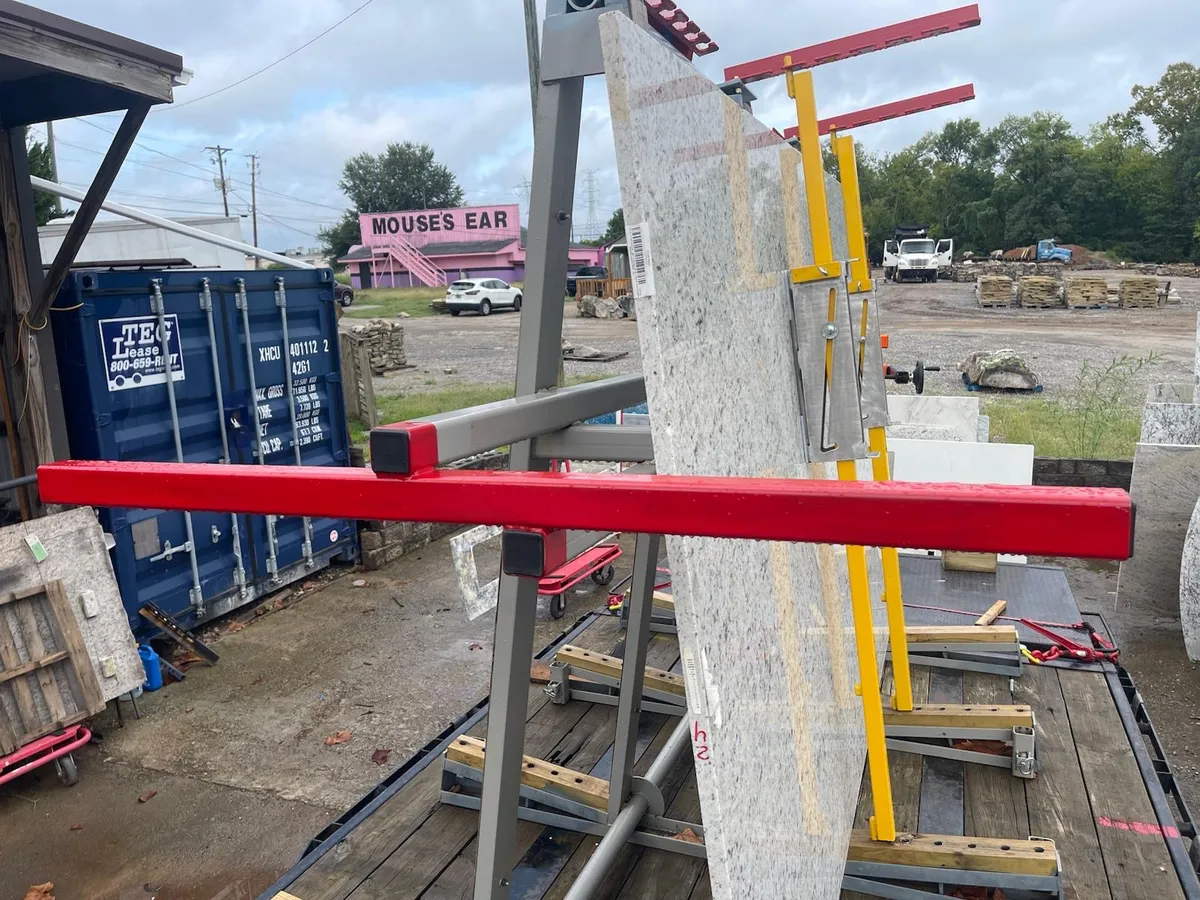
• Integrated mechanical compression load-securing system
• Built-in driver-protection collision bar
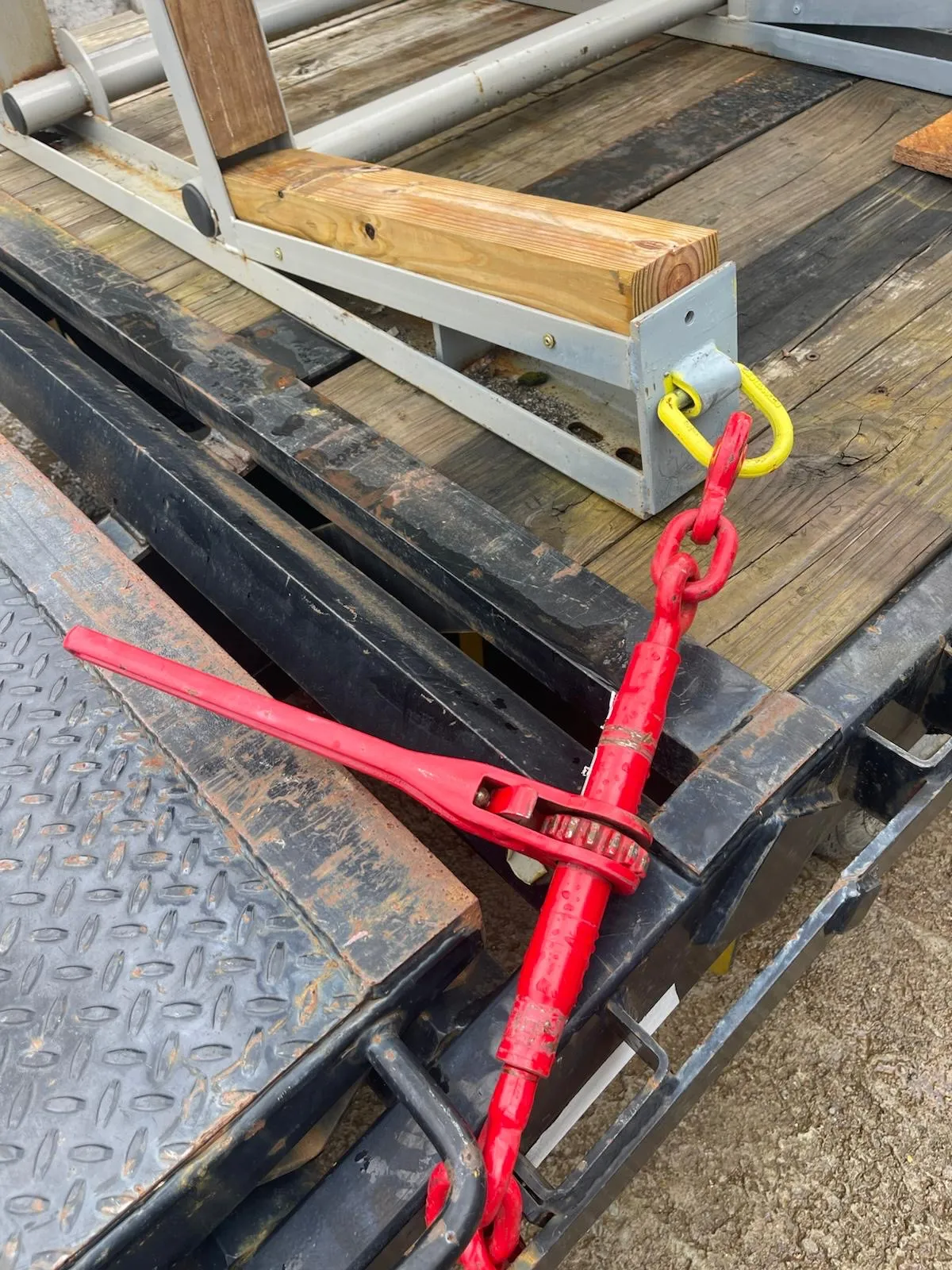
• Dual truck mounting options (undermount or D-ring chain binder)
• Four adjustable side-mounted safety poles for added stability
• Powder-coated steel construction

This is not an add-on restraint.
It is a purpose-built transport structure engineered for slab hauling fleets.

🔩 Key Transport Advantages

✅ Strapless primary load control
✅ Predictable compression-based restraint
✅ Reduced strap-related failure variables
✅ Designed specifically for truck transport environments
✅ Built on the proven TAF-30 structural platform

How the Truck Safe Strapless A-Frame Controls Slab Stability
Step 1

Mount the Transport Frame

Secure the SSH SL TAF-30 to the truck using either:

- Undermount permanent installation for dedicated slab trucks

- D-ring / chain binder mounting for mixed-use fleets

The result is a fixed structural A-frame anchored directly to the vehicle chassis.

Structure first.
Movement controlled at the source.


Step 2

Load Slabs Into Engineered Compression Zones

Position slabs against the A-frame supports.

Instead of wrapping tension straps across the load, slabs are aligned within designated mechanical compression zones built into the frame.

This establishes controlled contact points along the slab faces before transit begins.


Step 3

Engage the RockLock™ Mechanical Compression System

Activate the integrated RockLock™ compression mechanism.

The system applies consistent mechanical force across the slab stack — not tension from webbing, but controlled structural compression.

This:

- Eliminates strap stretch variability

- Maintains force through braking and cornering

- Reduces forward and backward rotational movement

- Minimizes slab shift caused by vibration

Compression remains constant regardless of temperature, moisture, or road conditions.


Step 4

Maintain Control Through Transit

During transport:

- Hard stops

- Road vibration

- Uneven pavement

- Tight turns

The compression system maintains slab restraint without relying on strap elasticity.

Straps may be used as secondary backup during transition periods — but compression remains the primary load control system.


Step 5

Controlled Release at Delivery

Disengage compression in a controlled sequence during unloading.

Because slabs were secured mechanically — not tensioned — release is predictable and repeatable.

No sudden strap recoil.
No re-tightening cycles.
No tension guesswork.

✅ Replace tension-based restraint with engineered mechanical compression.

Engineering Specifications & Performance Data

Model: SSH SL TAF-30
Application: Truck slab transport system

🔩 Structural & Mechanical Features

  • Heavy-duty structural steel A-frame construction

  • Integrated RockLock™ mechanical compression restraint system

  • Reinforced top-rail compression engagement

  • Mechanical quick-lock hardware

  • Fixed transport-grade structural geometry

  • Engineered load path for dynamic highway forces

  • Designed for truck-mounted slab transport

📐 Technical Specifications

  • Primary Restraint Type: Mechanical compression (RockLock™)

  • Construction: Heavy-duty structural steel

  • Finish: Powder-coated corrosion-resistant steel

  • Mounting: Truck A-frame transport configuration

  • Designed For: Dynamic transport forces (braking, vibration, twist)

  • Field Deployment: Mechanical assembly

Operational Risk & Transport Liability Exposure

The Hidden Liability of Strap-Only Slab Transport

Traditional slab transport depends on tension.

Straps stretch. Straps relax.
Straps depend on operator feel and retightening.

When road vibration, braking force, or trailer flex shifts slab weight, straps react after movement begins — not before.

That delay creates exposure in critical areas:

  • Slab shift during sudden braking or evasive maneuvers

  • Strap fatigue, webbing stretch, and hardware wear

  • Uneven compression across slab faces

  • Driver-dependent retightening and human error

  • DOT and OSHA citations tied to inadequate load control

  • Insurance disputes when restraint systems are questioned

Straps rely on material integrity.
Material changes with environment.

Heat. Moisture. Abrasion. Time.

Every variable increases uncertainty.

The Mechanical Compression Difference

The Truck Safe Strapless A-Frame (SSH SL TAF-30) replaces tension with fixed mechanical compression through the RockLock™ system.

Instead of reacting to slab movement, it applies continuous structural force against slab faces — resisting forward and backward rotation under dynamic transport conditions.

This changes the liability equation.

Measurable Organizational Benefits

  • Reduces reliance on variable strap tension

  • Provides consistent mechanical compression under vibration

  • Minimizes retightening and driver guesswork

  • Strengthens DOT and OSHA defensibility

  • Demonstrates proactive engineering to insurers

  • Standardizes slab securement across every truck

Mechanical compression doesn’t depend on stretch.
It depends on structure.

That distinction matters when braking hard at highway speed.

"With the RockLock™, we finally feel confident sending out 2-man teams with a single truck.

No more balancing acts."
— Field Supervisor, Fabrication Partner

Take Control of Slab Transport Stability Today

Strap tension changes.
Road conditions change.
Gravity doesn’t.

The Truck Safe Strapless A-Frame (SSH SL TAF-30) replaces reactive load securement with engineered mechanical compression designed specifically for slab transport.

Protect your drivers.
Reduce transport variability.


Standardize engineered restraint across your fleet.

Improvised securement invites uncertainty.
Mechanical compression delivers consistency.

Transport control isn’t an accessory.
It’s a structural decision.

Truck Safe Strapless A-Frame FAQS

Does this system completely eliminate straps?

The SSH SL TAF-30 is engineered to replace straps as the primary load-securing method through fixed mechanical compression.

However, straps may still be used as a secondary backup if company policy or DOT interpretation requires redundancy. The system is designed to carry the load structurally — not rely on strap tension alone.

How is mechanical compression different from traditional strap tension?

Straps rely on elastic tension. They stretch, relax, and require retightening.

The SSH SL TAF-30 applies fixed mechanical compression using the RockLock™ system. Compression does not stretch under vibration, braking, or temperature change. It provides consistent slab-face engagement throughout transport.

Is the SSH SL TAF-30 DOT compliant?

Load securement requirements are governed by DOT regulations for cargo control. The SSH SL TAF-30 is engineered to provide structural load restraint through mechanical compression.

Final compliance determinations should always align with company policy and local enforcement guidance. Many operations use this system to strengthen defensibility by demonstrating engineered load control rather than tension-only restraint.

Can this system handle sudden braking or highway vibration?

Yes. The SSH SL TAF-30 is specifically engineered for dynamic transport forces, including:

- Sudden braking

- Road vibration

- Trailer twist

- Uneven slab loading

Mechanical compression maintains consistent engagement when slabs attempt to shift forward or backward.

Does mechanical compression damage slab edges?

No. The system is designed to apply controlled compression across slab faces, not concentrated edge pressure. Proper setup and correct positioning ensure even load distribution.

How does this reduce liability?

Strap-only systems depend heavily on operator tightening and environmental variables.

Mechanical compression:

- Reduces variability

- Reduces retightening dependence

- Standardizes restraint across trucks

- Demonstrates engineered load control to insurers

It changes the conversation from “operator error” to “engineered structure.”

How long does installation take?

The SSH SL TAF-30 is designed for repeatable deployment in field conditions. Installation time depends on truck configuration and crew familiarity, but the system is engineered for practical daily use.

Who is this system best suited for?

-- Stone fabricators transporting slabs regularly

-- Operations with multiple transport trucks

-- Companies seeking stronger DOT defensibility

-- Teams wanting to reduce driver-dependent strap adjustments

-- Businesses looking to standardize slab transport procedures