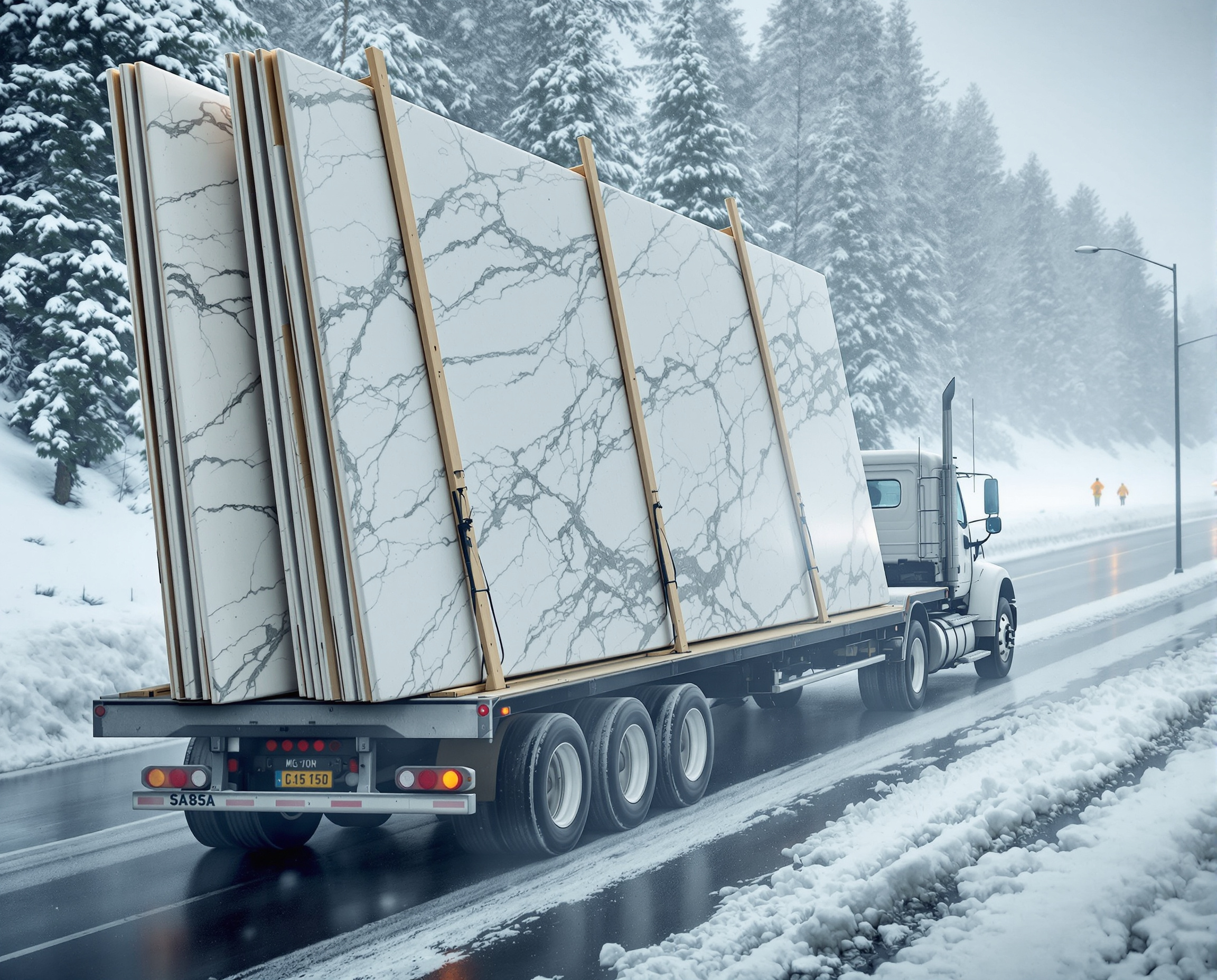
Cold Roads, Heavy Loads: How to Keep Stone Slabs Secure All Winter Long
Cold Roads, Heavy Loads: Winter Transport Safety for Trucks & Flatbeds
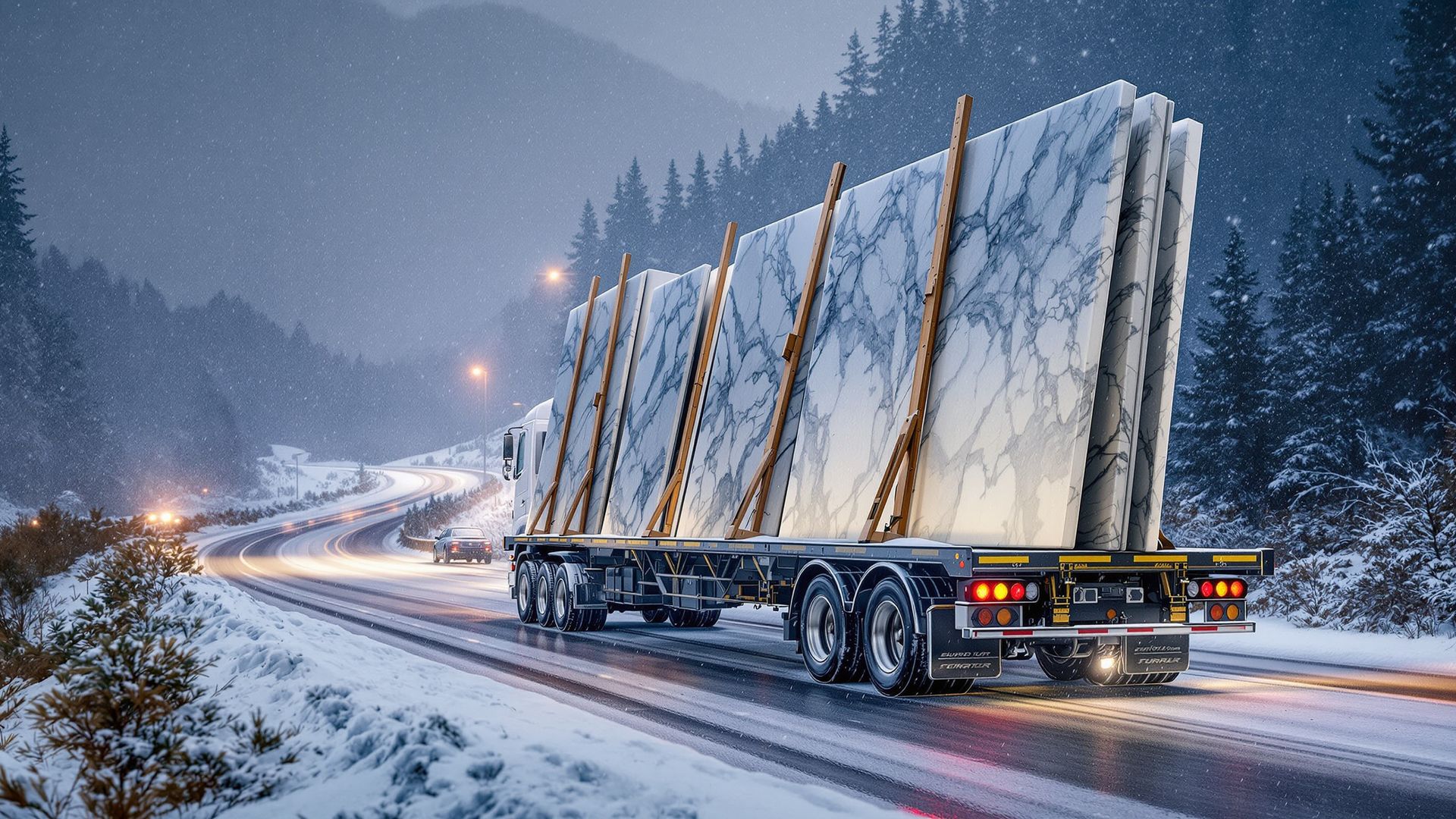
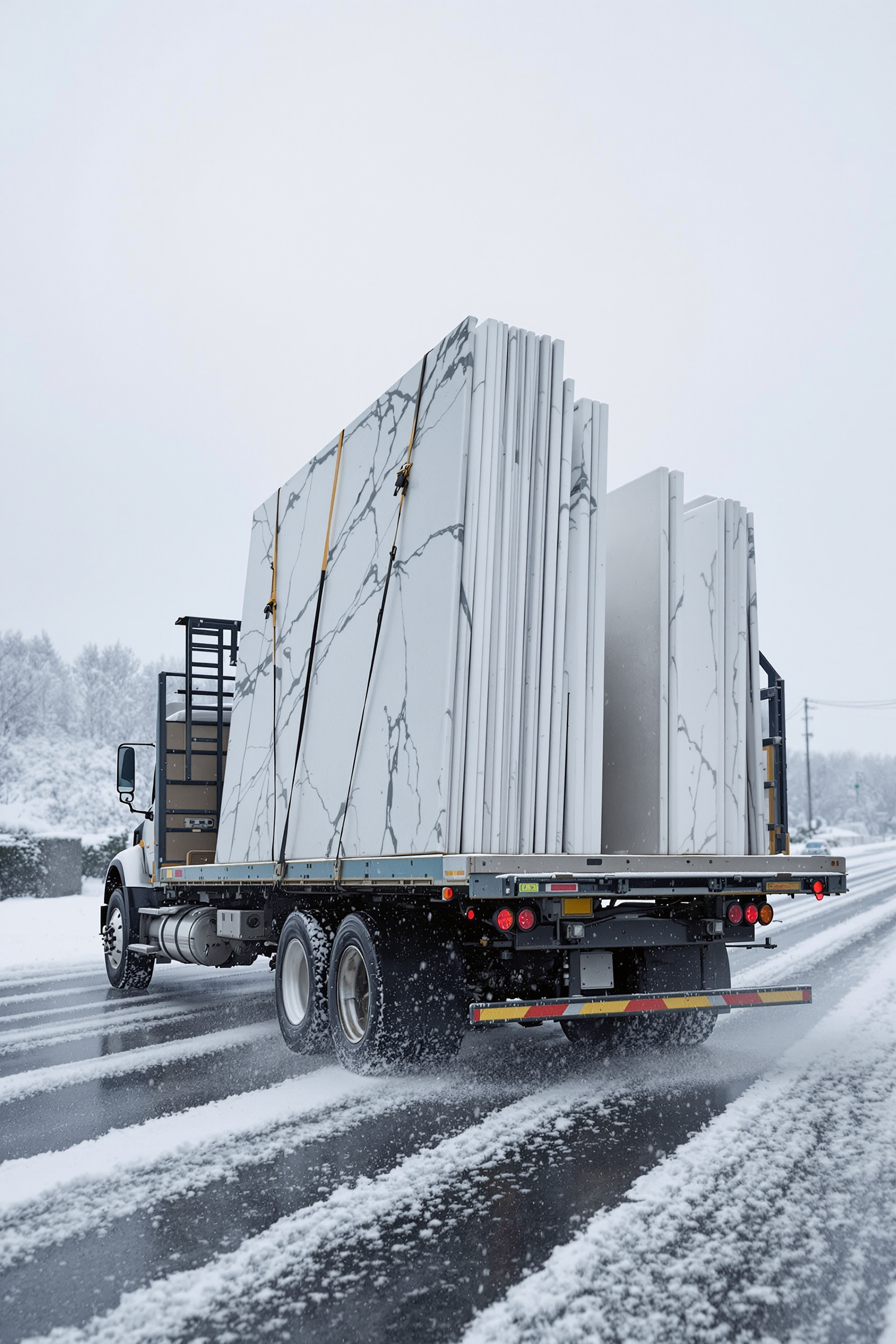
Winter Roads Change Everything for Stone Transport
Have you ever hit a winter pothole or icy patch and wondered whether your slabs shifted?
If you haul stone between November and March, you already know winter doesn’t just affect driving — it completely transforms slab behavior. Cold weather changes strap tension. Frost affects tire grip. Sudden bumps turn into amplified vibrations. And even the slightest slab movement can turn into a dangerous tilt if the frame isn’t stable.
Transporting kitchen countertop–grade slabs in winter requires more than just “tightening the straps.”
It requires understanding how stone behaves under cold, vibration, and motion.
The Winter Vibration Problem (And Why Slabs React Differently in Cold).
Every driver knows winter roads are rougher — potholes, cracks, uneven freeze-thaw surfaces. But most people don’t realize how this affects stone slabs.
Here’s what winter vibration does:
Creates micro-shifts between slabs
Loosens straps faster
Increases lateral pressure on frames
Weakens contact points as straps stiffen
Multiplies the force of bumps due to rigid metal frames in cold air
A slab that was stable in September may not be stable in December — even if strapped the same way.
This is why winter is the season when trucking and flatbed teams face the highest slab-related risk.
Cold Weather and Strap Tension: The Hidden Danger Nobody Talks About
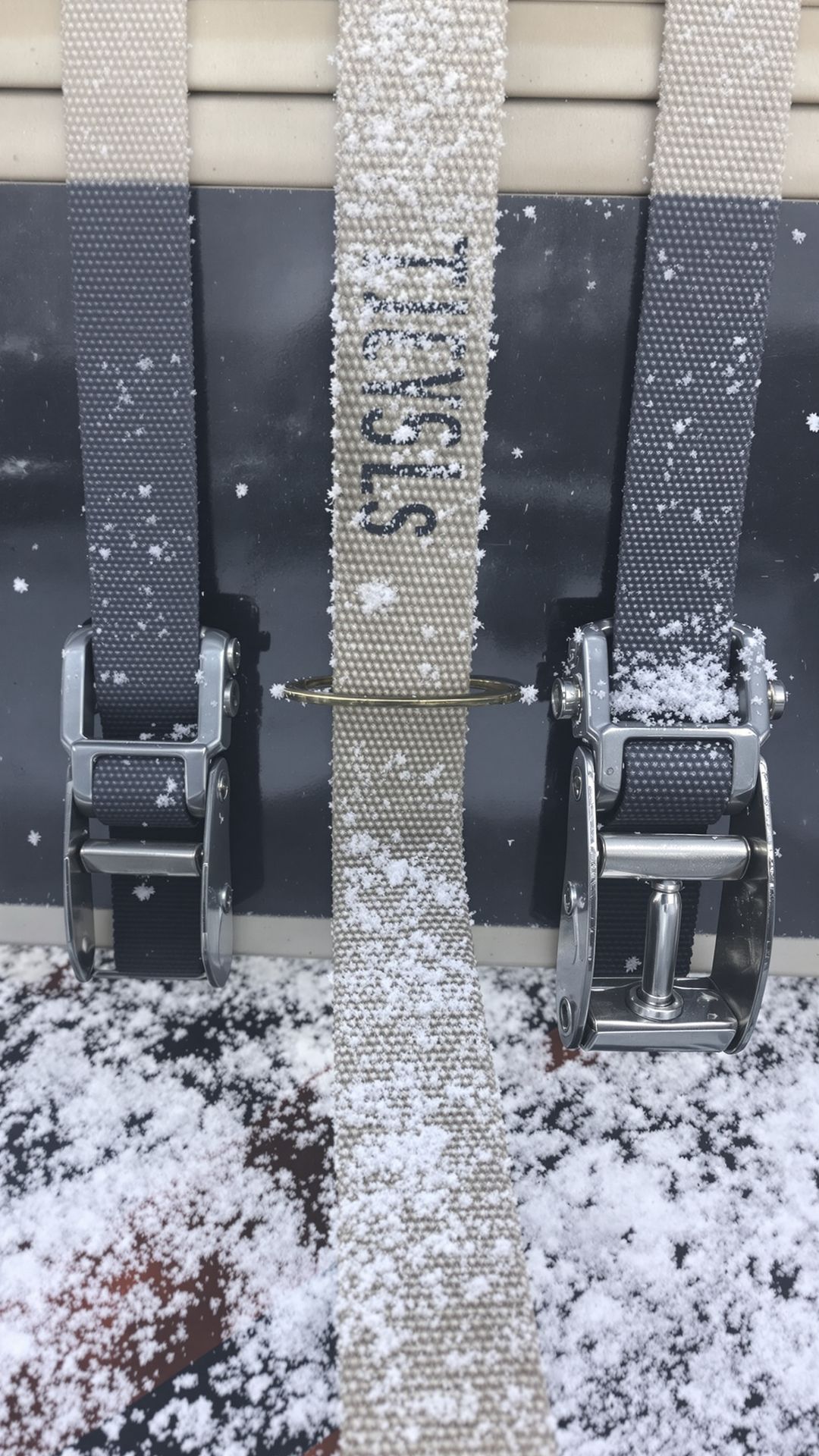
Here’s the surprising truth:
Cold weather reduces strap flexibility and tension.
When temperatures drop:
Straps stiffen
Fibers shrink
Tension decreases
Vibration loosens everything faster
You may strap down slabs perfectly at the shop…
Only to discover they’re loose 20 miles down the road.
This isn’t driver error — it’s physics.
If you’re not checking tension more frequently in winter, you’re not actually securing the load.
Frame Stability in Winter: Why Old A-Frames & Shop Racks Don’t Hold Up on the Road
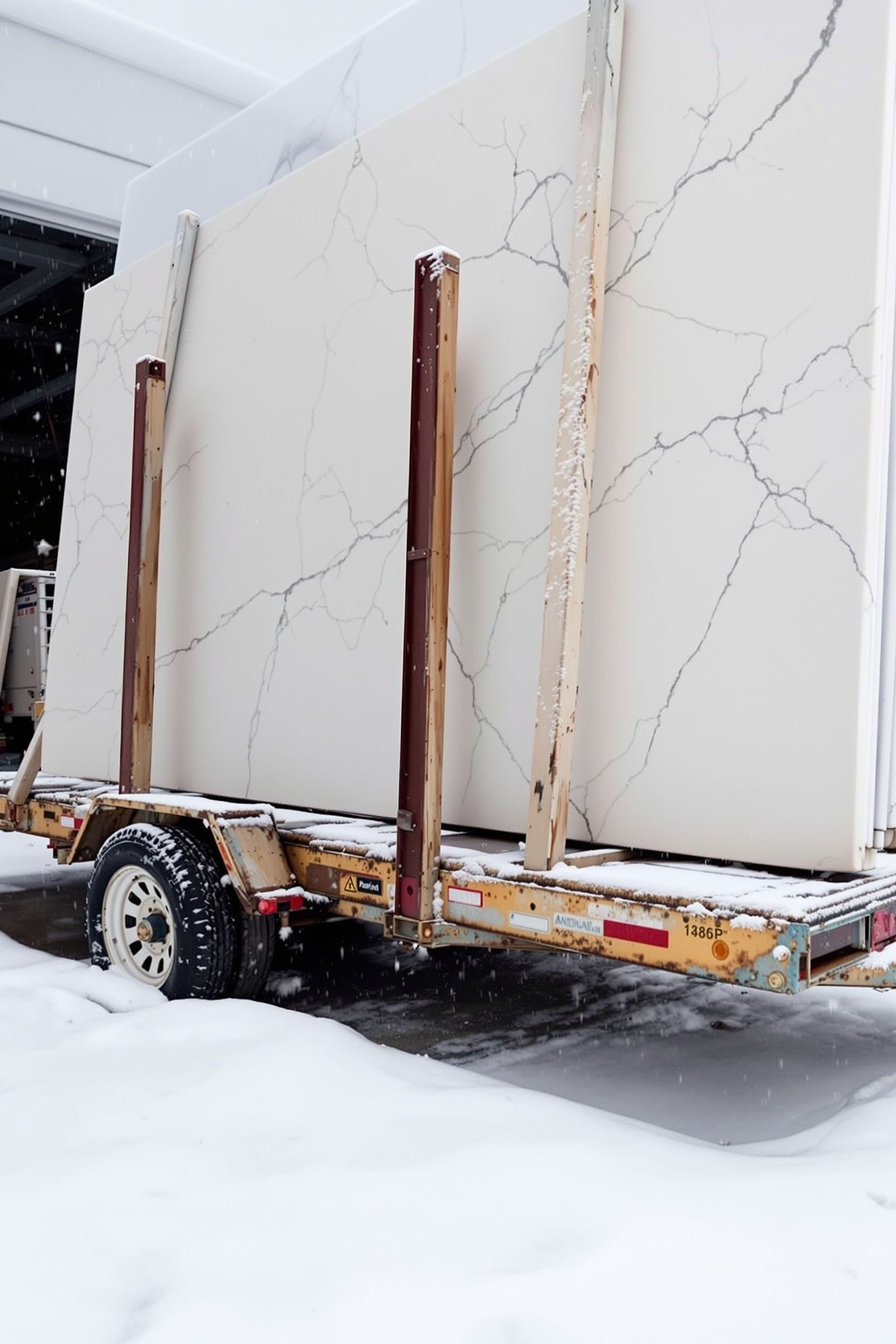
Old frames and makeshift A-frames are already risky, but winter magnifies every weakness.
Cold weather causes:
Metal to contract, loosening bolts
Wood to dry and crack, reducing load capacity
Surface grip to change, reducing friction holding slabs upright
Increased slab vibration, stressing every part of the system
On a winter road, an outdated frame doesn’t just “work less efficiently”…
It can become the reason a slab shifts, tilts, or collapses on the trailer.
Transporting heavy stone requires stable, predictable equipment — especially when road conditions aren’t.
The Most Dangerous Winter Moment: Sudden Stops & Side-to-Side Movement
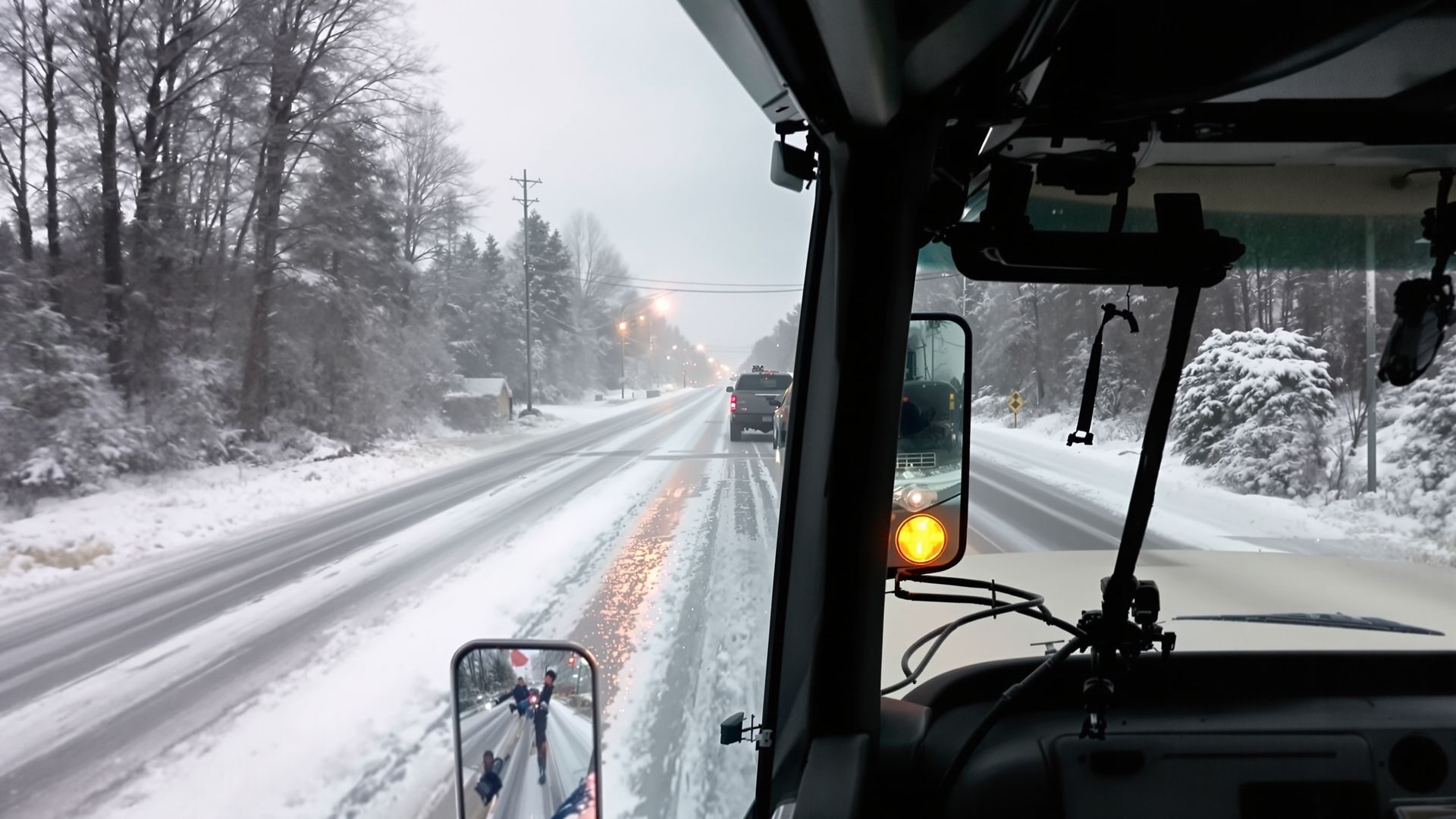
When a truck:
Slides slightly
Hits black ice
Brakes hard
Downshifts on a slick hill
Makes a turn on a wet shoulder
Slabs react instantly.
Tall, narrow, heavy:
Kitchen countertop slabs are some of the most unstable materials transported on American roads.
When sway begins, outdated frames and cold straps simply can’t counteract the momentum.
Preparing for Safe Winter Slab Hauling: The 2026 Transport Checklist
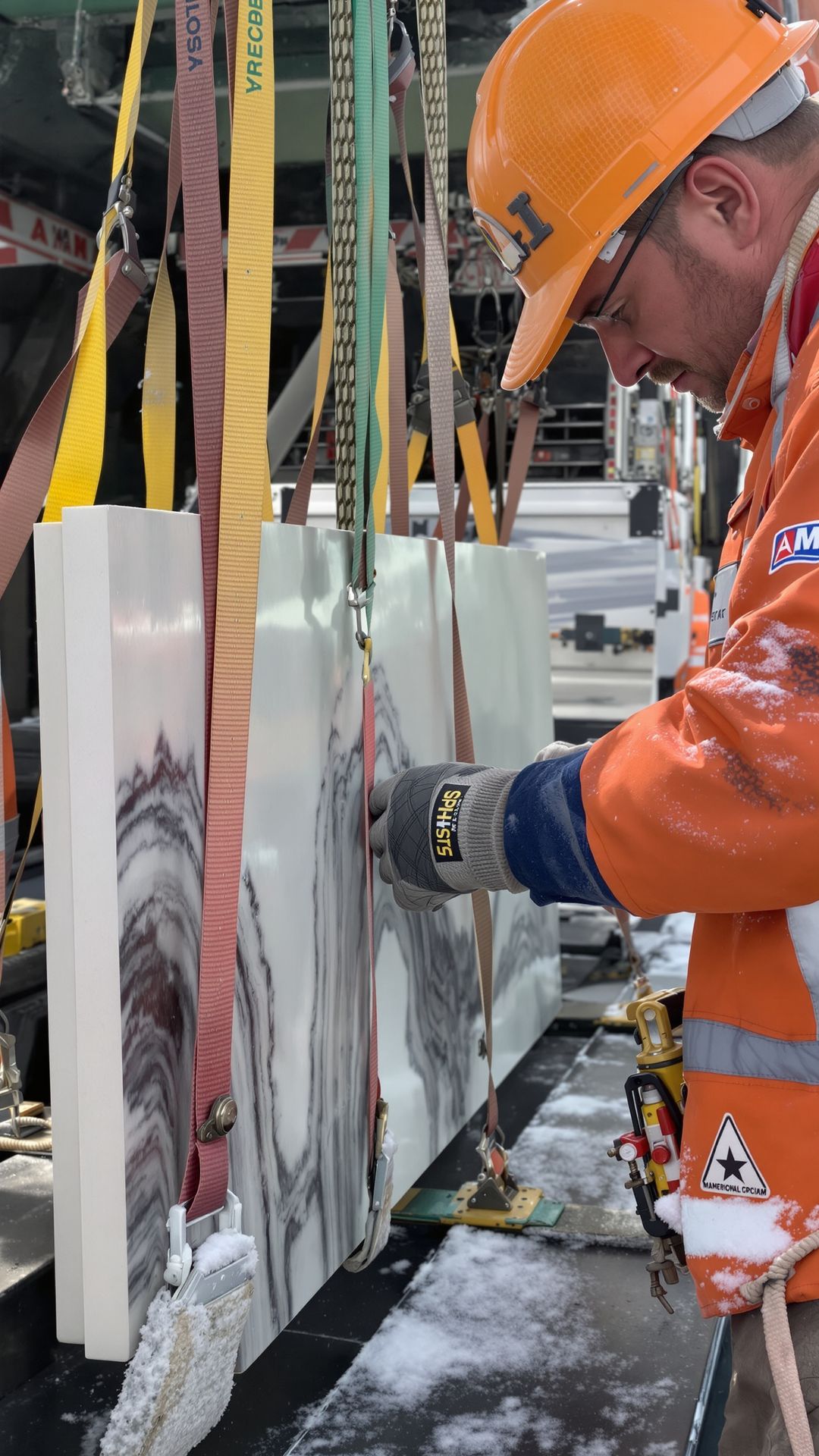
✔ Re-tension straps after the first 10 miles
Winter loosens straps faster than any other season.
✔ Avoid old A-frames or retrofit frames that show cracks or rust
Cold magnifies structural weaknesses.
✔ Reduce speed by 10–15% on cold days
Slab sway increases dramatically below 40°F.
✔ Use stabilized frame systems
Winter vibration requires more than straps alone.
✔ Don’t overload the trailer
Extra weight = extra sway.
✔ Inspect slabs for existing micro-leans
A small lean + winter roads = catastrophic shift risk.
✔ Train drivers for winter-specific slab hauling
Equipment matters — but habits keep crews alive.
This is how transport teams enter 2026 safer than ever.
Conclusion — Winter Doesn’t Forgive Old Safety Problems
Winter hauling isn’t about chance — it’s about preparation.
Cold air stiffens straps.
Rough roads amplify vibration.
Snow reduces friction.
Old frames become unpredictable.
And slabs behave differently than they do any other time of year.
If your team wants a safer 2026, it starts on the winter roads of December.

🔗 Want to learn more about preventing slab accidents on trucks, trailers, and flatbeds?
Visit https://safestonehandling.com/ for transport safety tools, systems, and industry-leading insights.